
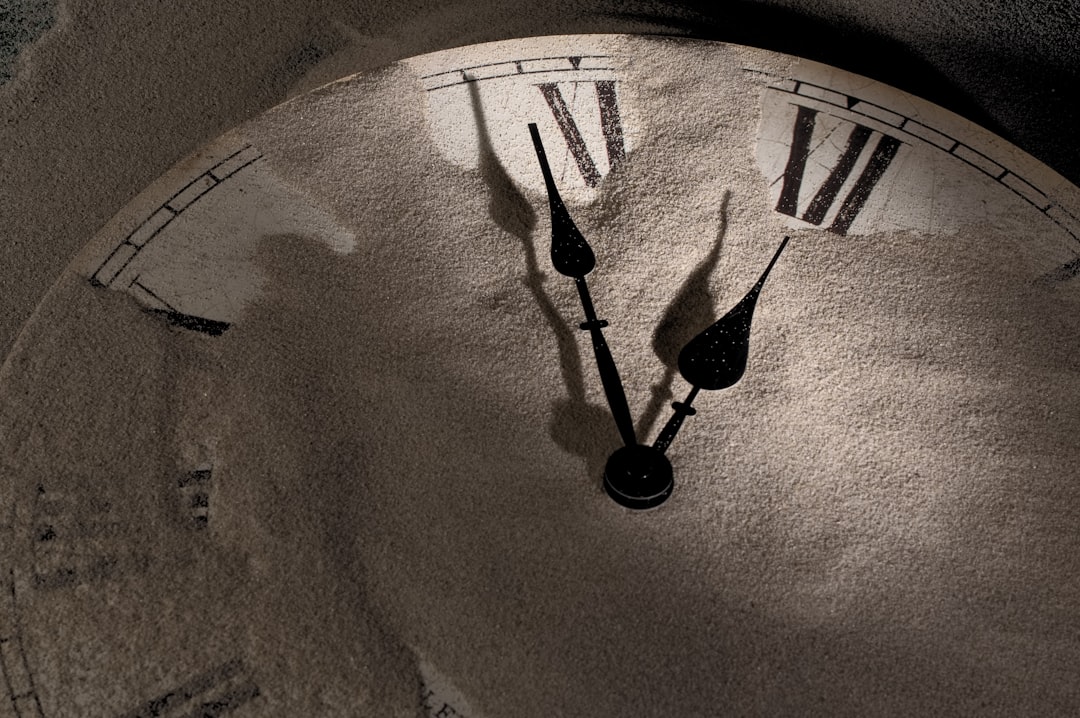
Time Travel Is Real: Warp Speed Secrets Revealed
Introduction: The Science Behind Time Travel
Time travel has fascinated humans for centuries. Scientists now believe it might be possible. The key lies in moving at incredible speeds. This idea comes from Einstein's theory of relativity. It shows how time changes with speed.
When you move very fast, time slows down for you. This is called time dilation. Astronauts experience this effect. They age slightly slower than people on Earth. The faster you go, the more time slows down.
Warp speed could make time travel real. It means moving faster than light. Light travels at 186,000 miles per second. Nothing can go faster than light in normal space. But scientists have found possible ways around this.
This article explores the science of time travel. We will look at how warp speed works. We will examine real experiments and theories. You will learn what scientists are discovering right now.
Time travel might not be science fiction anymore. Recent research shows it could be possible. The secrets lie in understanding space and time. Let's explore this exciting topic together.
Einstein's Theory of Relativity Explained
Albert Einstein changed how we see time. His theory of relativity has two parts. Special relativity deals with fast motion. General relativity deals with gravity.
Special Relativity Basics
Special relativity says strange things happen at high speeds. Time slows down for moving objects. Lengths appear shorter. Mass increases. These effects are real and measurable.
GPS satellites prove time dilation. They move fast around Earth. Their clocks run slower than ground clocks. Scientists must adjust for this difference. Otherwise, GPS would not work properly.
Time Dilation in Action
Time dilation affects astronauts. Scott Kelly spent a year in space. He traveled at 17,000 miles per hour. His time moved slightly slower than Earth time. The difference was tiny but real.
Particles called muons show time dilation. They decay quickly on Earth. But fast-moving muons last longer. Their internal clocks slow down. This proves time dilation is real.
What Is Warp Speed Really?
Warp speed means faster-than-light travel. It comes from science fiction. But scientists are studying it seriously. They call it warp drive technology.
Alcubierre Drive Theory
Miguel Alcubierre proposed a warp drive in 1994. It would compress space in front of a ship. It would expand space behind the ship. The ship would ride a wave of spacetime.
This method avoids breaking light speed. The ship itself doesn't move fast. Space moves around the ship. This could allow faster-than-light travel.
Current Research Status
NASA studies warp drive concepts. Their Eagleworks laboratory tests new ideas. Scientists are making progress. But many challenges remain.
Researchers need exotic matter. This matter has negative energy. It might not exist in nature. Finding or creating it is difficult.
Practical Time Travel Possibilities
Time travel to the future is possible now. We just need to go very fast. Traveling to the past is much harder. It might require wormholes or other methods.
Forward Time Travel Methods
- High-speed space travel: Fly near light speed for a year. Return to find Earth centuries older.
- Orbiting black holes: Gravity slows time. Stay near a black hole briefly. Return to find much time passed.
- Fast spacecraft: Future ships might reach 90% light speed. Time would slow significantly for passengers.
Backward Time Travel Challenges
Traveling to the past faces big problems. It might create paradoxes. The grandfather paradox is famous. If you kill your grandfather, you couldn't be born.
Some theories avoid paradoxes. The multiverse theory suggests new timelines. Others think the universe prevents paradoxes. We don't know which is correct.
Real Experiments and Evidence
Scientists have conducted real time travel experiments. Some show surprising results. Others confirm Einstein's predictions.
Atomic Clock Experiments
Scientists flew atomic clocks on planes. The clocks moved at different speeds. Fast-moving clocks showed slower time. This matched relativity predictions exactly.
Modern atomic clocks are very precise. They can detect tiny time differences. Even speed changes of a few miles per hour affect them.
Particle Accelerator Results
Particle accelerators prove time dilation daily. They speed particles to near-light speeds. The particles live much longer than expected. Their internal clocks slow down dramatically.
The Large Hadron Collider has important data. It shows how particles behave at high energies. This helps scientists understand spacetime better.
Warp Drive Technology Development
Several research groups work on warp drives. They face huge challenges but make progress. Here are the main approaches being studied.
NASA's Eagleworks Laboratory
NASA's advanced propulsion lab tests new ideas. They study the EmDrive and other concepts. Some tests show small thrust effects. More research is needed to confirm results.
Scientists at Eagleworks explore spacetime manipulation. They use advanced mathematics and physics. Their work could lead to breakthroughs.
Private Research Efforts
Companies like SpaceX help indirectly. They develop better rockets and spacecraft. This advances space travel technology. Eventually, it might lead to warp-capable ships.
Universities worldwide study related physics. They explore quantum mechanics and relativity. New discoveries could enable warp travel.
Practical Tips for Understanding Time Travel
You can learn about time travel concepts. Here are practical steps to understand this topic better.
Study Basic Physics
- Start with high school physics books
- Watch educational videos online
- Read about Einstein's life and work
- Join online science communities
- Ask questions when you don't understand
Follow Current Research
- Read science news websites regularly
- Follow NASA and other space agencies
- Watch lectures by physicists
- Join astronomy clubs
- Visit science museums
Frequently Asked Questions
Can humans time travel now?
We can travel to the future already. But the effect is very small. Astronauts gain microseconds. We need much higher speeds for noticeable time travel.
Is warp speed possible?
Scientists think it might be possible. But we need major technology advances. Current physics allows it in theory. Practical implementation is far away.
Would time travelers see themselves?
This depends on the type of time travel. Some theories prevent meeting yourself. Others allow multiple timelines. We don't know what would really happen.
How fast is warp speed?
Warp speed means faster than light. Light travels at 671 million miles per hour. Warp speed would be even faster. Specific warp factors come from science fiction.
Could we build a time machine?
Maybe in the distant future. We need to solve many physics problems first. Energy requirements are enormous. Material science must advance greatly.
Does gravity affect time?
Yes, gravity slows time. Clocks run slower in strong gravity. GPS satellites must account for this. Black holes dramatically slow time.
Are there time travelers among us?
Probably not. Most scientists think backward time travel is impossible. Or it might be possible only to the future. No evidence shows visitors from the future.
Real Examples of Time Dilation
Time dilation happens in everyday life. Here are some real examples you might experience.
Airline Travel Effects
Airline pilots experience time dilation. They fly at about 600 miles per hour. Over their careers, they gain microseconds. The effect is tiny but measurable with precise clocks.
Satellite Systems
GPS satellites must adjust for time dilation. They move at 8,700 miles per hour. Their clocks run slower than Earth clocks. Without correction, GPS would be inaccurate.
Particle Physics
Cosmic rays hit Earth's atmosphere. They create particles called muons. These muons should decay before reaching ground. But time dilation lets them survive the trip.
Statistics and Data About Time Travel
Here are important numbers about time travel physics.
- Light speed: 299,792,458 meters per second
- Time dilation at 90% light speed: 2.3 times slower
- ISS astronauts time gain: about 0.01 seconds per year
- GPS satellite time correction: 38 microseconds per day
- Energy needed for warp drive: equivalent to Jupiter's mass
Step-by-Step Guide to Understanding Time Dilation
Follow these steps to grasp time dilation concepts.
- Learn basic relativity: Start with simple explanations of Einstein's work.
- Study the twin paradox: Understand how one twin ages slower during space travel.
- Calculate simple examples: Use online time dilation calculators.
- Read real experiments: Learn about atomic clock tests.
- Watch visual explanations: Find animations showing time dilation effects.
- Join discussions: Talk with others about time travel concepts.
- Stay updated: Follow new discoveries in physics.
Conclusion: The Future of Time Travel
Time travel research continues to advance. Scientists make new discoveries regularly. Warp drive technology remains theoretical. But physics doesn't forbid it.
We understand time dilation well. We use it in everyday technology. GPS systems depend on relativity corrections. This proves the science is real and useful.
Future breakthroughs might enable warp travel. New materials or energy sources could help. Quantum physics might provide solutions. The possibilities are exciting.
Time travel to the future is already possible. We just need faster spacecraft. Travel to the past remains uncertain. Paradox problems might prevent it.
Keep learning about this fascinating topic. Follow scientific developments. Who knows what we might discover next? The future of time travel looks promising.