
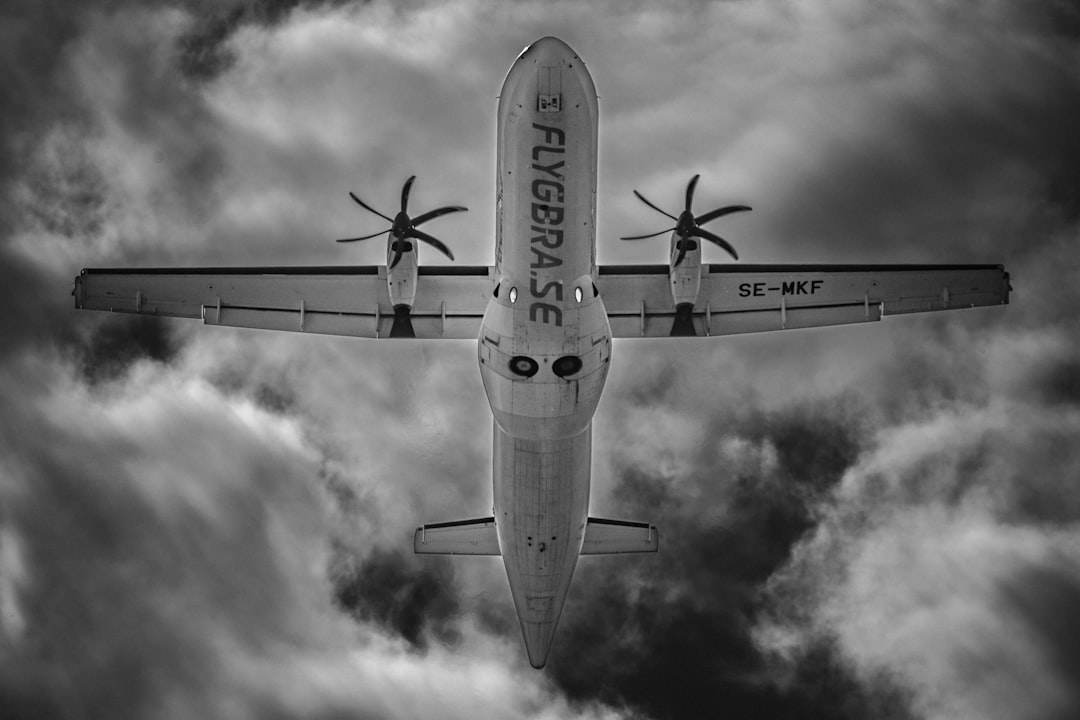
How Fast Does an Airplane Travel? Speed Secrets & Flight Facts
Introduction: The Need for Speed in the Sky
Have you ever looked up at a plane? You see a tiny dot in the sky. It moves slowly. But that is an illusion. Airplanes are incredibly fast. They connect our world. They shrink distances. This article will explore airplane speed. We will look at different types of planes. We will explain how speed is measured. You will learn about the factors that affect speed. We will also share fun facts and practical tips. By the end, you will understand the magic of flight speed. You will see the sky in a new way.
Air travel is a modern miracle. A journey that took months by ship now takes hours. This is all thanks to speed. But speed in the air is complex. It is not just about the engine power. Many things work together. The air itself, the plane's design, and the weather all matter. Pilots and engineers think about speed all the time. For them, it is about safety and efficiency. For us, it is about adventure and connection. Let us dive into the fascinating world of aviation speed.
Understanding Airspeed: It's Not Just One Number
When we ask "how fast," the answer is not simple. Pilots use different speed measurements. Each one tells a different story. The main types are Indicated Airspeed (IAS), True Airspeed (TAS), and Ground Speed (GS).
Indicated Airspeed (IAS)
This is the speed shown on the plane's instrument. It comes from a pitot tube. This tube measures air pressure. IAS is very important for pilots. It tells them if the plane is flying safely. It helps avoid stalling. Stalling is when a plane loses lift. It is very dangerous. IAS is the pilot's primary reference during flight.
True Airspeed (TAS)
This is the plane's actual speed through the air. Air gets thinner at high altitudes. Thinner air means less pressure. The pitot tube reads less pressure. So, IAS is lower than TAS at high altitude. TAS is calculated by correcting IAS for altitude and temperature. It is the real speed of the plane in the air mass.
Ground Speed (GS)
This is the most important for passengers. Ground speed is the plane's speed over the ground. Think of it this way. You are on a moving walkway. Your walking speed is TAS. The walkway's speed is the wind. Your speed relative to the floor is GS. A strong tailwind increases GS. A strong headwind decreases GS. This is why flight times can vary. The Federal Aviation Administration (FAA) provides guidelines on these concepts.
Commercial Jet Speeds: From Takeoff to Landing
Most people fly on commercial jets. These are planes like the Boeing 737 or Airbus A320. Their speeds are optimized for safety and fuel economy.
Takeoff Speed (V1, VR, V2)
Takeoff is a critical phase. The plane accelerates down the runway. It reaches several key speeds. V1 is the "decision speed." Before V1, the pilot can abort takeoff safely. After V1, they must continue. VR is "rotation speed." This is when the pilot pulls back on the controls. The nose lifts off the ground. V2 is the safe climb speed. A typical large jet's takeoff speed is between 150 and 180 mph (240-290 km/h).
Cruising Speed
This is the speed during the main part of the flight. For a modern jet, cruising speed is often around Mach 0.78 to Mach 0.85. Mach 1 is the speed of sound. So, these planes fly at 78-85% of the speed of sound. In more familiar terms, that is about 560 to 580 miles per hour (900-930 km/h). The exact speed depends on the aircraft. For example, a Boeing 787 Dreamliner cruises at Mach 0.85. An older Boeing 747-400 cruises at Mach 0.855. You can compare aircraft specs on Boeing's official site.
Landing Speed
Landing requires slower speeds. The plane must touch down gently. A typical landing speed for a large jet is about 150-160 mph (240-260 km/h). This speed is called Vref (reference landing speed). It varies with the plane's weight. A lighter plane lands slower. Pilots carefully manage this speed for a smooth arrival.
Factors That Affect How Fast an Airplane Travels
Many things change a plane's speed. Understanding these helps explain flight times.
1. Aircraft Type and Design
Not all planes are built the same. A small propeller plane is much slower than a jet. Even among jets, designs differ. Sleek, long-range planes like the Airbus A350 are built for efficiency at high speeds. The shape of the wings (airfoil) is crucial. Swept-back wings are better for high-speed flight. They reduce drag.
2. Altitude
Planes fly high to go faster. The air is thinner at 35,000 feet. Thin air creates less drag (air resistance). Less drag means the engines can push the plane faster using less fuel. This is why jets climb to high altitudes quickly. It is the sweet spot for speed and efficiency.
3. Weather and Winds
Wind is a huge factor. The Jet Stream is a river of fast-moving air high in the sky. It flows from west to east. A flight from New York to London often gets a strong tailwind from the Jet Stream. This can add over 100 mph to the ground speed. The return flight fights a headwind. This makes it slower. Airlines plan routes to use helpful winds. They avoid bad weather that causes turbulence and requires speed reductions.
4. Weight
A heavier plane flies slower. It needs more lift to stay up. More lift means more drag. More drag means lower speed for the same engine power. This is why planes burn fuel during flight. As they get lighter, they can sometimes fly more efficiently.
5. Air Traffic Control (ATC)
Planes do not fly at any speed they want. Air traffic controllers give them speed instructions. This is to manage traffic. It keeps a safe distance between planes. Over crowded areas, ATC may tell a plane to slow down. This is for sequencing into the airport.
Speed Comparison: Different Types of Aircraft
Let's put speeds into perspective with a comparison table.
- Small Propeller Plane (Cessna 172): Cruising speed ~140 mph (225 km/h). Used for training and short trips.
- Regional Jet (Embraer E175): Cruising speed ~520 mph (835 km/h). Common for short flights between cities.
- Standard Commercial Jet (Boeing 737/Airbus A320): Cruising speed ~560 mph (900 km/h). The workhorse of global aviation.
- Wide-body Jet (Boeing 777): Cruising speed ~560 mph (900 km/h). Similar cruising speed but carries more people farther.
- Supersonic Concorde (Retired): Cruising speed ~1,350 mph (2,170 km/h) (Mach 2.04). It crossed the Atlantic in under 3.5 hours.
- Military Fighter Jet (F-16): Maximum speed ~1,500 mph (2,400 km/h) (Mach 2+). Built for agility and speed.
Data on historical aircraft like the Concorde can be found at the Smithsonian Institution.
The Quest for Supersonic and Hypersonic Flight
Faster than sound? It is possible but challenging.
The Sound Barrier and Mach Numbers
Sound travels at about 767 mph (1,235 km/h) at sea level. This speed changes with temperature and altitude. Mach 1 is the speed of sound. Breaking the sound barrier creates a sonic boom. It is a loud thunder-like noise. The Concorde was the only commercial supersonic airliner. It flew from 1976 to 2003. High costs and noise rules ended its service.
The Future: Boom Supersonic and Others
New companies are trying again. Boom Supersonic is building the Overture jet. It aims to fly at Mach 1.7. That is twice the speed of today's jets. NASA is also researching quiet supersonic technology. The goal is to reduce the sonic boom to a gentle "thump." Hypersonic flight (Mach 5+) is for military and space vehicles. It is not for passenger travel yet.
Practical Tips: How Speed Affects Your Travel
As a traveler, plane speed impacts your journey. Here are actionable tips.
1. Understanding Flight Time Estimates
Airlines publish "block times." This is the total time from gate to gate. It includes taxiing, takeoff, climb, cruise, descent, and landing. The actual flying time is less. Websites like FlightAware show real flight tracks and speeds. You can see if your flight has a strong tailwind. This might mean an early arrival.
2. Why Eastbound Flights Are Often Faster
The Jet Stream flows west to east. Flights from the US to Europe get a boost. Flights from Europe to the US fight against it. A flight from JFK to LHR might take 6.5 hours. The return flight might take 7.5 hours. This is normal. It is not the airline being slow.
3. Choosing an Aircraft for Speed
If you want the fastest option, check the aircraft type. On long routes, airlines use different planes. An Airbus A350 might be slightly faster than a Boeing 777 on the same route. But the difference is often just minutes. Wind and ATC have a bigger effect.
4. The Myth of "Faster" Airlines
All major airlines fly their jets at similar speeds. They optimize for fuel burn, not raw speed. A faster cruise burns more fuel. Fuel is a huge cost. So airlines find the most economical speed. This is called the "cost index." It balances time and fuel.
Frequently Asked Questions (FAQ)
1. What is the fastest passenger airplane ever?
The Concorde was the fastest. Its top speed was Mach 2.04, or about 1,350 mph. It flew from New York to London in under 3.5 hours. It was retired in 2003.
2. Why don't airplanes fly faster to save time?
Fuel cost is the main reason. Flying faster increases drag exponentially. This means much higher fuel burn. Airlines choose a speed that balances time and cost. It is the "sweet spot" for profit.
3. Can turbulence make a plane slow down?
Yes. In rough air, pilots often reduce speed. This is called "turbulence penetration speed." It makes the ride smoother. It also reduces stress on the aircraft structure. Safety always comes first.
4. How fast does a plane go during an emergency?
It depends on the emergency. For a rapid descent (like loss of cabin pressure), the plane can descend very quickly. The speed might increase initially but is then controlled. Pilots follow specific procedures for each situation.
5. What is "Mach tuck"?
Mach tuck is a dangerous condition. It can happen as a plane approaches the speed of sound. The center of lift shifts. This causes the nose to pitch down. Modern jets have systems to prevent this. It is a key reason airliners stay below Mach 0.9.
6. How do I find out how fast my flight is going?
Many in-flight entertainment systems have a moving map. It often shows ground speed. You can also use apps like FlightAware to track live speed data from the ground.
7. Will we ever have supersonic passenger flights again?
It is very likely. Companies like Boom Supersonic are testing new planes. The goal is to make it affordable and quiet. We could see new supersonic routes by the 2030s.
Real-World Examples and Statistics
Let's look at some real flight data. According to IATA, the global average airline speed is around 560 mph (900 km/h). Here are specific route examples:
- Los Angeles (LAX) to Tokyo (HND): Distance ~5,500 miles. Average flight time: 11 hours. Average ground speed: 500 mph (slower due to headwinds over the Pacific).
- Dubai (DXB) to New York (JFK): Distance ~6,800 miles. Average flight time: 13 hours 30 minutes. Average ground speed: 504 mph.
- London (LHR) to Cape Town (CPT): Distance ~6,000 miles. Average flight time: 11 hours 45 minutes. Average ground speed: 511 mph.
The fastest subsonic commercial flight on record? In February 2020, a British Airways Boeing 747 flew from New York to London. It was aided by a powerful Jet Stream of over 200 mph. The ground speed reached 825 mph. That is faster than the speed of sound at that altitude! The flight landed 80 minutes early. You can read about this record on BBC News.
Step-by-Step: How Pilots Manage Speed During a Flight
- Pre-Flight Planning: Pilots calculate speeds. They consider weight, weather, and airport conditions. They determine V1, VR, V2, and cruise speeds.
- Taxi and Takeoff: The pilot accelerates the plane using the throttles. They monitor the airspeed indicator. At V1, they commit to takeoff. At VR, they rotate. They climb at V2.
- Climb to Cruise: Air traffic control may give speed instructions. The pilot follows a climb schedule. Speed increases as the plane gets lighter and higher.
- Cruise: The autopilot maintains the planned Mach number or True Airspeed. The pilot monitors fuel burn and weather. They may request altitude changes for better winds.
- Descent and Approach: The pilot reduces speed. They lower flaps and landing gear. This increases drag and slows the plane. They stabilize on the final approach at Vref.
- Landing and Rollout: After touchdown, the pilot uses reverse thrust and brakes. They slow the plane to a safe taxi speed.
Conclusion: The Marvel of Modern Air Travel Speed
So, how fast does an airplane travel? We have learned it is a complex question. A typical jet flies at about 560 to 580 miles per hour. But that number tells only part of the story. Speed in aviation is a balance. It balances physics, economics, and safety. Engineers design planes for efficiency. Pilots manage speed with great skill. Weather and winds play a huge role.
Next time you fly, think about the speed. Look at the moving map. You are crossing countries in minutes. You are traveling faster than almost anything else in human experience. It is a quiet, comfortable miracle. The future promises even more. New planes will be more efficient. Supersonic travel may return. The dream of going faster, safely, continues. The sky is not the limit; it is the highway. We hope this guide helped you understand the incredible speed of flight. Safe and fast travels!
For more fascinating insights into how travel works, check out our guide on how airports operate or our story on first-time flying tips.