
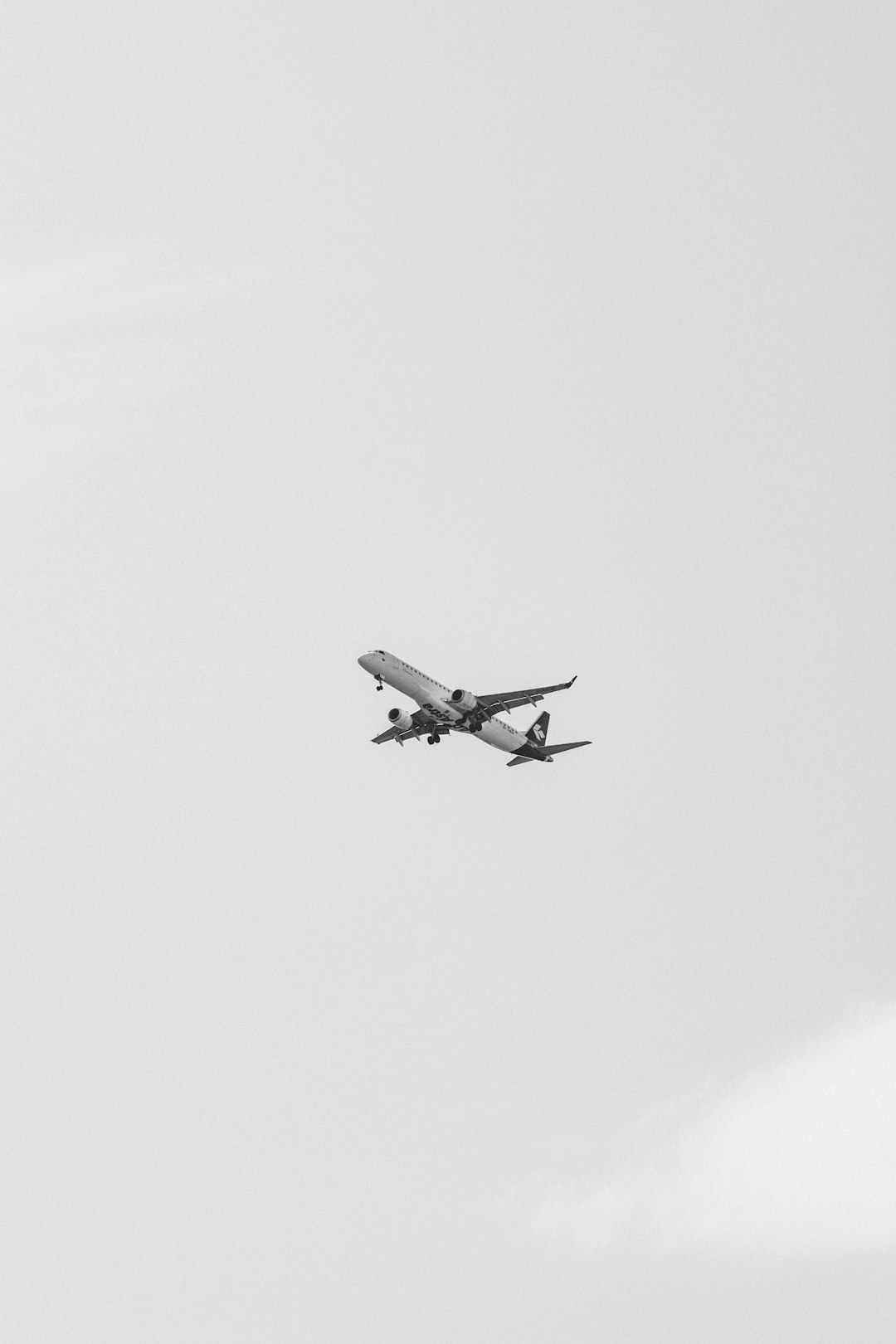
How Fast Does an Airplane Travel? Speed Facts & Flight Times
Have you ever looked up at the sky? You see a tiny airplane moving slowly. But it is actually moving very fast. How fast does an airplane travel? The answer is not simple. Different planes fly at different speeds. Many things change how fast a plane can go. This guide will explain airplane speed. We will talk about passenger jets, small planes, and military jets. You will learn what speed means for your travel. Let's begin our journey into the world of flight speed.
Airplane speed is amazing. It lets us cross countries in hours. Long ago, such trips took weeks. Today, we can have breakfast in New York and dinner in London. Speed connects our world. But how is it measured? What are the limits? This article answers all your questions. We will use simple words. We will give clear examples. You will become an expert on airplane speed. Ready? Let's take off!
Understanding Airplane Speed: The Basics
First, we must understand how speed is measured. Planes use special units. Cars use miles per hour (mph) or kilometers per hour (km/h). Planes often use knots. A knot is one nautical mile per hour. A nautical mile is a bit longer than a normal mile. It is based on the Earth's size. Pilots and air traffic controllers use knots. It is the standard worldwide.
Indicated Airspeed vs. Ground Speed
This is very important. There are two main types of speed for planes. The first is indicated airspeed. This is the speed shown on the plane's instrument. It measures how fast air flows over the wings. It is critical for flying safely. The second is ground speed. This is the plane's actual speed over the ground. Wind changes ground speed. A tailwind pushes the plane forward. This makes ground speed higher. A headwind pushes against the plane. This makes ground speed lower. Your flight time depends on ground speed.
For example, imagine a plane with an airspeed of 500 knots. If it has a 100-knot tailwind, its ground speed is 600 knots. It will arrive early. If it has a 100-knot headwind, its ground speed is 400 knots. It will arrive late. Airlines plan for winds. They use weather forecasts. This helps them give accurate flight times.
Mach Number: The Speed of Sound
For very fast planes, we use Mach number. This compares speed to the speed of sound. Sound travels at about 767 mph at sea level. This speed changes with air temperature. Mach 1 is the speed of sound. Mach 2 is twice the speed of sound. Most passenger jets fly below Mach 1. They are subsonic. The famous Concorde was supersonic. It flew at Mach 2. Only military jets regularly fly supersonic today.
How Fast Do Commercial Passenger Jets Fly?
This is what most people want to know. You sit in a seat. You look out the window. How fast are you going? Most big jets fly at similar speeds. Their engines are designed for efficiency. They fly high to save fuel. Let's look at the numbers.
Cruising Speed of Common Airliners
Here are the typical cruising speeds for popular planes:
- Boeing 737: This is a very common plane. It flies at about 460-530 knots (530-610 mph). That is roughly Mach 0.78. There are many models of the 737. The newer ones are more efficient.
- Airbus A320: This is Boeing's main competitor. Its speed is very similar. It cruises at about 450-520 knots (518-598 mph). You see these planes on short and medium flights.
- Boeing 777: This is a big, long-range plane. It flies slightly faster. Its cruising speed is about 480-510 knots (552-587 mph). It is used for flights across oceans.
- Airbus A350: This is a modern, efficient plane. It flies at around 480-520 knots (552-598 mph). It has new engines and lightweight materials.
- Boeing 787 Dreamliner: Another modern plane. Its speed is similar, about 485-515 knots (558-593 mph). Its special feature is comfort, not extra speed.
As you can see, most jets fly at a similar speed. Why? It is the sweet spot for fuel burn and engine wear. Flying faster uses much more fuel. Airlines want to save money. So they fly at an efficient speed. The difference between planes is often range or passenger count, not top speed.
What Was the Concorde's Speed?
The Concorde was special. It was a supersonic passenger jet. It flew from 1976 to 2003. Its cruising speed was Mach 2.04. That is about 1,350 mph. It could fly from London to New York in under 3.5 hours. A normal jet takes about 7-8 hours. It was very fast. But it was also very expensive to fly and maintain. After a crash and high costs, it was retired. No supersonic passenger flights exist today. But companies like Boom Supersonic are trying to bring them back.
Factors That Affect How Fast an Airplane Travels
Many things change a plane's speed. The pilot does not just push the throttle to maximum. They must think about safety, cost, and comfort. Here are the main factors.
1. Aircraft Weight
A heavy plane needs more power to go fast. It also uses more fuel. A plane is heaviest at takeoff. It is full of fuel and passengers. As it flies, it burns fuel. It gets lighter. Sometimes, it can fly a bit faster later in the flight because it is lighter.
2. Weather and Wind
We talked about headwinds and tailwinds. They are a huge factor. Pilots and dispatchers choose flight paths to use tailwinds. Over the Atlantic Ocean, there are strong jet streams. These are rivers of fast air high up. Flying east from America to Europe, planes ride a tailwind. This makes the trip faster. Flying west, they fight a headwind. This makes the trip slower. You can see this on flight tracking sites. An eastbound flight is often an hour shorter.
3. Air Traffic Control
The sky has highways called airways. Air traffic controllers tell pilots where to go. They give them a speed and altitude. Sometimes, for traffic, a controller will tell a pilot to slow down. This happens near busy airports. Everyone must line up to land. So, even if the plane can go fast, it might have to wait.
4. Flight Distance
For a very short flight, the plane may never reach its top cruising speed. It spends more time climbing and descending. For a long flight, it cruises for many hours. It will spend most of the trip at its optimal speed.
5. Airline Policy
Airlines have rules to save fuel. This is called cost index. It is a number pilots put into the computer. It tells the computer to prioritize speed or fuel savings. A high number means "fly faster, use more fuel." A low number means "fly slower, save fuel." Most airlines use a low cost index to save money. This means planes often fly a little slower than they technically could.
Step-by-Step: How Pilots Manage Speed During a Flight
Let's follow a flight from start to finish. We will see how speed changes.
- Takeoff Roll: The plane accelerates down the runway. A big jet needs to reach about 150-180 mph to lift off. This speed is called V1 (decision speed) and VR (rotation speed).
- Initial Climb: After takeoff, the plane climbs steeply. It flies at a lower speed for safety, about 250 knots below 10,000 feet. This is a rule to reduce noise and risk.
- Climb to Cruise: Above 10,000 feet, the plane accelerates. It climbs to its cruising altitude, usually between 30,000 and 40,000 feet. The climb speed is set for engine efficiency.
- Cruise: This is the main part. The autopilot keeps a constant speed. The pilots monitor fuel and winds. They may ask air traffic control for a better altitude for speed.
- Descent: About 100-150 miles from the destination, the plane starts to descend. The engines are set to idle. The plane slows down. It must be below 250 knots again when it goes below 10,000 feet.
- Approach and Landing: The plane lines up with the runway. It extends flaps and landing gear. This creates drag and slows the plane. The final approach speed for a big jet is about 130-160 mph. It touches down smoothly.
Every phase has a target speed. Pilots follow these targets for a safe and efficient flight.
Real Examples: Flight Times and Speeds
Let's look at real routes. This shows how speed works in practice.
Example 1: New York (JFK) to Los Angeles (LAX)
This is a coast-to-coast flight in the USA. Distance: about 2,500 miles.
- Typical Flight Time: 5 hours and 30 minutes going west. About 5 hours going east. Why the difference? The prevailing winds create a headwind going west.
- Average Ground Speed: Westbound: ~455 mph. Eastbound: ~500 mph. The plane's airspeed is similar, but the wind changes the ground speed.
- Aircraft: Boeing 777 or Airbus A330 often fly this route.
Example 2: London (LHR) to Dubai (DXB)
This is a long Middle Eastern route. Distance: about 3,400 miles.
- Typical Flight Time: 6 hours and 45 minutes.
- Average Ground Speed: About 505 mph.
- Aircraft: Airbus A380 or Boeing 777.
You can check real-time speeds on websites like Flightradar24. It shows the ground speed of any plane in the sky.
How Fast Do Small Private Planes Fly?
Not all planes are big jets. Small planes are much slower. A single-engine Cessna is a common training plane. Its cruising speed is about 110-130 knots (125-150 mph). A faster private jet, like a Cessna Citation, can fly at 400-500 knots (460-575 mph). That is close to a big airliner. But small propeller planes are slow. They fly lower, where the air is thicker. This creates more drag.
Military Aircraft: The Speed Champions
Military planes are built for speed and maneuverability, not fuel economy.
- Lockheed SR-71 Blackbird: This spy plane holds the record. It could fly over Mach 3 (over 2,200 mph). It could outfly missiles. It is now retired. You can see it in museums.
- Fighter Jets (F-15, F-22, Su-35): These can fly over Mach 2. They have powerful engines. They can go very fast for short periods.
- Hypersonic Vehicles: These are the future. Hypersonic means Mach 5 or faster (over 3,800 mph). NASA and the military are testing them. They are not yet common.
Speed records are tracked by the Fédération Aéronautique Internationale (FAI).
Practical Tips for Travelers: Understanding Speed
How can you use this knowledge? Here are some tips.
- Check Flight Time History: When booking, look at the scheduled time. Then use a site like FlightStats to see the actual average time. This tells you if the schedule is realistic.
- Understand Why Flights are "Fast" or "Slow": If your flight arrives early, you likely had a strong tailwind. If it's late, you may have faced headwinds or traffic delays.
- Choose Your Direction: Flights from the US to Europe are often faster than the return trip. Remember this when planning. The eastbound trip is shorter.
- Track Your Flight: Use a flight tracking app during your trip. You can see your ground speed in real time. It's fun to watch the numbers.
- Ask About Aircraft: Some newer planes, like the Boeing 787, are more efficient. They might have better cabin pressure and humidity. This can make the trip feel better, even if the speed is the same.
Frequently Asked Questions (FAQ)
1. What is the fastest passenger plane ever?
The Tupolev Tu-144 and the Concorde were supersonic. The Concorde was the only successful one. It flew at Mach 2.04. No current passenger plane flies that fast.
2. Why don't airlines fly faster to save time?
Fuel cost. Flying faster increases fuel burn dramatically. A small increase in speed needs a lot more fuel. It is not worth the cost for the time saved.
3. Can turbulence make a plane go slower?
Yes. In rough air, pilots often reduce speed. This is for safety and comfort. It makes the ride smoother and puts less stress on the plane.
4. How fast does a plane go when landing?
A large jet lands at about 130-160 mph. A small plane lands at about 55-70 mph. The exact speed depends on the plane's weight and wind.
5. What is "V1" speed I hear about at takeoff?
V1 is the "decision speed." Before V1, if there is a problem, the pilot will stop the plane on the runway. After V1, the pilot must take off, even with an engine failure. It is a critical safety speed.
6. Do bigger planes fly faster?
Not always. Some of the biggest planes, like the Airbus A380, fly at similar speeds to smaller jets (about Mach 0.85). Speed is more about engine design and wing shape than size.
7. Will we ever get supersonic passenger flights again?
Maybe. Companies are working on it. The challenges are noise (sonic booms) and cost. New designs try to be quieter and more efficient. It might happen in the next decade.
Statistics and Data on Airplane Speed
Let's look at some numbers from trusted sources.
- The average cruising speed of a commercial jet is about 547-575 mph (source: International Air Transport Association - IATA analysis).
- The Boeing 747-8, a famous jumbo jet, has a top speed of Mach 0.86, or about 570 mph.
- The Gulfstream G650, a private jet, is one of the fastest civilian planes. It can reach Mach 0.925, nearly the sound barrier.
- According to the Federal Aviation Administration (FAA), air traffic in the US handles over 45,000 flights per day. All those planes must manage their speeds safely.
- The speed of sound at 35,000 feet (cruise altitude) is about 660 mph, slower than at sea level because the air is colder.
Conclusion: The Need for Speed in the Sky
So, how fast does an airplane travel? We have learned it depends. A small Cessna flies at 150 mph. A Boeing 777 flies at 560 mph. The legendary Concorde flew at 1,350 mph. Speed is a balance. Airlines balance time, cost, and safety. For passengers, speed means connection. It brings families together. It allows for global business. It makes the world feel smaller.
Next time you fly, think about the speed. Look at the flight map on your screen. You are moving at over 500 miles per hour. You are high above the clouds. It is a modern miracle. We hope this guide helped you understand it better. The world of aviation is full of amazing facts. Speed is just one of them. Safe travels!
Want to learn more about how planes work? Check out our guide on how airplanes fly or our article on the world's busiest airports.