
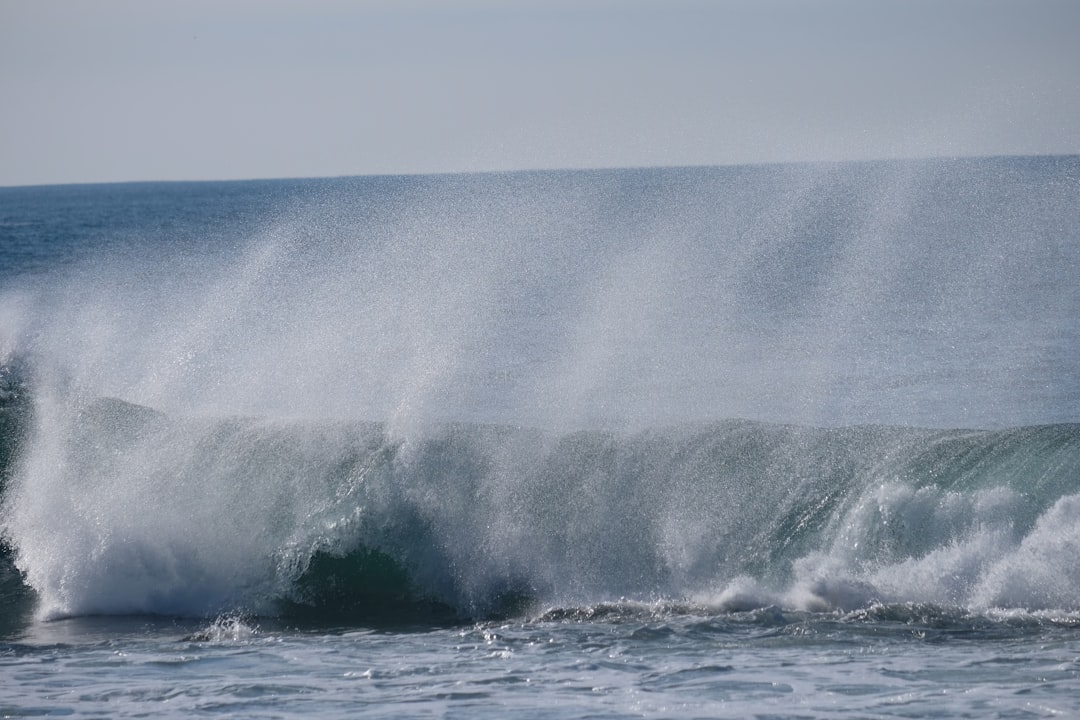
How Fast Does a Tsunami Travel? Speed, Science & Safety Facts
Imagine a wall of water. It is taller than a building. It moves faster than a jet plane. This is a tsunami. Tsunamis are powerful ocean waves. They cause massive destruction. But how fast do they travel? The answer is surprising. In the deep ocean, a tsunami can travel as fast as a commercial jet. This speed is about 500 to 600 miles per hour (800 to 970 kilometers per hour). That is as fast as a Boeing 747. This incredible speed is why tsunamis are so dangerous. They cross entire oceans in just hours. This blog post will explain tsunami speed. We will look at the science behind it. We will share safety tips. We will also look at real examples. Understanding tsunami speed can save lives.
The Basic Science of Tsunami Speed
A tsunami is not a normal wave. Normal waves are caused by wind. They only affect the ocean's surface. A tsunami is caused by a large displacement of water. This is usually from an earthquake under the sea. It can also be from a landslide or volcanic eruption. The entire water column, from the surface to the sea floor, moves. This creates a wave with immense energy.
The Formula for Speed: It's All About Depth
The speed of a tsunami is not random. It follows a simple physics formula. The speed depends on one main thing: the depth of the ocean. In deep water, tsunamis travel very fast. In shallow water near the coast, they slow down. The formula is: Speed = √(g × d). In this formula, "g" is gravity (9.8 m/s²). "d" is the depth of the ocean. The √ symbol means square root.
Let's break this down. The average depth of the Pacific Ocean is about 4,280 meters (14,040 feet). If we put that number into the formula, we get: Speed = √(9.8 × 4280) = √(41,944) ≈ 205 meters per second. Convert that to kilometers per hour: 205 m/s × 3.6 = 738 km/h (about 458 mph). This matches the speed of a jet. You can learn more about this physics from the National Oceanic and Atmospheric Administration (NOAA).
Deep Ocean vs. Coastal Speed: A Dramatic Change
The speed changes dramatically as the wave approaches land. This is a key point for safety.
- Deep Ocean Speed: 500-600 mph (800-970 km/h). The wave is very long and low. It may be only 1-2 feet high. Ships at sea often do not notice it passing.
- Coastal Shelf Speed: As the ocean floor rises, the wave slows. At a depth of 100 meters (330 feet), the speed drops to about 113 km/h (70 mph).
- Near Shore Speed: In very shallow water (10 meters/33 feet deep), speed drops to around 36 km/h (22 mph).
When the wave slows down, its energy does not disappear. Instead, the wave grows taller. This is called "shoaling." The water piles up. A wave that was harmless in deep ocean can become a towering wall of water at the coast.
What Causes a Tsunami to Form?
To understand the speed, we must know the cause. Most tsunamis start with a sudden movement of the seafloor.
Submarine Earthquakes: The Primary Trigger
Over 80% of tsunamis are caused by large earthquakes under the ocean. These happen at tectonic plate boundaries. One plate slides under another in a process called subduction. When these plates get stuck and then suddenly slip, they move a huge volume of water upward. The U.S. Geological Survey (USGS) monitors these earthquakes globally. Not every underwater earthquake creates a tsunami. It needs to be strong (usually magnitude 7.0 or higher) and involve vertical movement of the seafloor.
Other Causes: Landslides and Volcanoes
- Landslides: A large landslide into the water can displace water quickly. This can happen on coastal cliffs or underwater on steep slopes. The 1958 Lituya Bay tsunami in Alaska was caused by a landslide. It created the tallest wave ever recorded.
- Volcanic Eruptions: An eruption on or near the ocean can collapse part of a volcano into the sea. The famous 1883 eruption of Krakatoa in Indonesia generated devastating tsunamis.
- Meteorite Impacts: This is very rare. A large space rock hitting the ocean would create a massive tsunami. Scientists study this for planetary defense.
How Tsunami Warning Systems Work
Because tsunamis travel so fast, warning systems are critical. They give people time to evacuate. Modern systems use science and technology.
The DART System: Deep-Ocean Detection
The United States and other countries use the Deep-ocean Assessment and Reporting of Tsunamis (DART) system. These are special buoys placed in the deep ocean. They sit on the seafloor and measure tiny changes in water pressure. This pressure change indicates a tsunami wave passing overhead. The buoy sends this data via satellite to warning centers. Scientists then calculate the speed, direction, and size of the tsunami. You can see the network of DART buoys on the NOAA DART program page.
From Detection to Warning: The Timeline
- Earthquake Detection: Seismic stations around the world detect an earthquake within minutes. They estimate its location and magnitude.
- Tsunami Threat Assessment: If the quake is under the ocean and strong enough, tsunami warning centers are alerted. They check DART data if available.
- Warning Issued: Centers like the Pacific Tsunami Warning Center (PTWC) issue alerts. They send messages to emergency managers, media, and the public. The time from earthquake to warning can be less than 5 minutes.
- Evacuation: Local authorities sound sirens and order evacuations. People must move to high ground immediately.
For a local tsunami, the wave can hit in minutes. For a distant tsunami, there may be hours of warning time. This depends on the distance and the ocean depth between the source and the coast.
Real-World Examples of Tsunami Speed and Impact
History shows us the terrifying power and speed of tsunamis.
The 2004 Indian Ocean Tsunami
This was one of the deadliest natural disasters in history. A magnitude 9.1 earthquake struck off the coast of Sumatra, Indonesia. The tsunami waves radiated outward at jet speed.
- Travel Time: The wave reached Banda Aceh, Indonesia, in about 20 minutes. It hit Thailand in 1.5 hours. It traveled across the Indian Ocean to Sri Lanka and India in about 2 hours. It even reached the coast of Africa over 7 hours later.
- Speed: In the deep Indian Ocean, it traveled at speeds around 500-600 mph.
- Impact: Over 230,000 people died in 14 countries. The fast travel and lack of a warning system contributed to the high death toll. Learn more from the UNESCO report on the disaster.
The 2011 Tohoku, Japan Tsunami
A magnitude 9.0 earthquake hit off the east coast of Japan. This caused a massive tsunami.
- Travel Time: The first wave hit the Japanese coast in as little as 10-30 minutes in some areas. This is a "local tsunami." There was very little time to react.
- Speed & Height: The wave slowed and piled up. It reached heights over 40 meters (130 feet) in some places. It traveled up to 10 km (6 miles) inland.
- Impact: Nearly 20,000 people died. It also caused the Fukushima Daiichi nuclear disaster. Japan has one of the best warning systems. But the wave was too close and too big for many to escape. The Japan Meteorological Agency provides detailed analysis.
Practical Tsunami Safety Tips You Need to Know
If you live near or are visiting a coast, know what to do. Your actions can save your life.
Before a Tsunami: Be Prepared
- Know the Risk: Is your area prone to tsunamis? Check local hazard maps. Know your evacuation zone.
- Plan Your Route: Identify the fastest path to high ground (at least 100 feet above sea level) or a designated tsunami shelter. Practice walking it.
- Make a Kit: Have an emergency kit ready. Include water, food, medicine, a flashlight, and a radio. Keep important documents in a waterproof bag.
- Stay Informed: Sign up for local emergency alerts on your phone. Know the difference between a tsunami watch (possible threat) and a warning (imminent threat).
During a Tsunami Warning: Act Fast
- Do Not Wait: If you feel a strong earthquake near the coast, do not wait for an official warning. Evacuate immediately. A local tsunami can arrive in minutes.
- Go Inland and Up: Move to high ground as quickly as possible. If you cannot go up, go inland. Every foot inland or upward increases your safety.
- Leave Everything Behind: Your life is more important than your possessions. Do not go back for things or to watch the wave.
- If You Are Boating: If you are in a boat in deep water (>100 meters), stay there. Do not return to port. Tsunamis are barely noticeable in deep water. If you are in a harbor or shallow water, get to land and evacuate.
After a Tsunami: Be Cautious
- Wait for the All-Clear: Tsunamis are a series of waves. The first wave may not be the largest. Wait for official word that it is safe to return.
- Avoid Flood Waters: Water can be contaminated, hide dangerous debris, or have strong currents.
- Check for Injuries: Help others if you can do so safely.
For detailed family plans, visit the Ready.gov Tsunami page.
Frequently Asked Questions (FAQ)
1. Can you outrun a tsunami?
No, you cannot outrun a tsunami. On flat ground, even a slow tsunami (20-30 mph) is faster than the fastest human. Your only safe option is to go to high ground or a tall, strong building immediately.
2. How fast was the fastest tsunami ever recorded?
The fastest theoretical speeds are in the deepest parts of the ocean, around 600 mph. The 2004 Indian Ocean tsunami traveled at these speeds across the deep sea. The speed at impact varies based on coastal depth.
3. Does a tsunami travel faster than sound?
No. The speed of sound in air is about 767 mph. The speed of sound in water is much faster, about 3,315 mph. A tsunami's top speed (600 mph) is slower than sound in both air and water.
4. Why are tsunamis so fast in deep water?
It's physics. The wave's speed is determined by water depth. The deep ocean is very deep—thousands of meters. This allows the wave's energy to travel at incredible speeds, like the formula Speed = √(gravity × depth) shows.
5. How much warning time do you usually have?
It depends. For a local tsunami (source close to shore), warning time can be just 10-30 minutes. For a distant tsunami (from across the ocean), modern warning systems can provide several hours of advance notice.
6. Can a tsunami be predicted?
We cannot predict the earthquake that causes it. But once an earthquake happens, scientists can forecast the tsunami. They predict its arrival time, size, and affected areas using data from seismic networks and ocean buoys.
7. Where are tsunamis most common?
The Pacific Ocean's "Ring of Fire" has the most tsunamis. This area has many subduction zones and volcanoes. Countries like Japan, Indonesia, Chile, and the Pacific Northwest of the USA are at high risk. The Indian Ocean and Mediterranean Sea are also at risk.
The Future: Tsunami Research and Safety
Scientists are always working to improve our understanding and safety.
Better Warning Technology
New sensors and faster computers make warnings more accurate. Scientists are also using artificial intelligence (AI) to analyze earthquake data quicker. The goal is to issue reliable warnings within 1-2 minutes of an earthquake. Projects like U.S. Tsunami Warning Centers are constantly being upgraded.
Community Education and Preparedness
Technology is useless if people do not know how to respond. Communities in tsunami zones hold regular drills. They put up clear evacuation signs. Schools teach children what to do. Public awareness is the best defense. Organizations like the UNESCO Intergovernmental Oceanographic Commission coordinate global education efforts.
Building for Resilience
Some communities build sea walls or flood gates. Others plant mangrove forests to absorb wave energy. New buildings in hazard zones are designed to be "tsunami resilient." They have open ground floors to let water pass or are built on strong pillars.
Conclusion: Respect the Speed, Save Your Life
So, how fast does a tsunami travel? We have seen the answer. In the deep ocean, it races at the speed of a jet airliner. This speed is the reason for its deadly reach. As it approaches land, it slows down. But it grows into a towering, destructive force. The science is clear. The history is tragic. The 2004 and 2011 tsunamis showed us the power of nature.
But knowledge is power. Understanding the speed of a tsunami is the first step to safety. Remember the key points. Know the natural warning signs. Feel a strong, long earthquake near the coast? See the ocean suddenly recede? Hear a loud roar from the sea? These mean GO. Move immediately to high ground. Do not wait. Have a plan. Practice your evacuation route. Stay informed with official alerts.
The ocean is beautiful. But it can also be dangerous. Respect its power. By learning about tsunami speed and safety, you protect yourself, your family, and your community. Share this knowledge. It might save a life. For more information on natural disasters and preparedness, explore our other safety guides.